Tilting at the Machine
Control, Deflection, and the Anticipatory Stigma of Automation
When sociologists studied automation in the 1970s, the protagonist was the assembly line worker. The threat was visible and mechanical. Half a century later, advancements in machine learning threaten precisely the cognitive, non-routine work that once justified professional status.
Yet workers in these newly exposed occupations often report remarkably low personal threat. Objective exposure poorly predicts whether workers actually experience automation as threatening, and the gap between what AI can do and what workers believe it will do to them is large and patterned.
Rather than treating threat perception as a strict calculation of job loss probability, this project approaches it as a problem of identity-relevant stress. When new technologies threaten core professional tasks, they create what I call the anticipatory stigma of automation. Workers do not wait passively for displacement. They actively defend against obsolescence by claiming domains of irreducible human competence, invoking justifications like judgment, creativity, or human connection to explain why their own tasks remain irreplaceable.
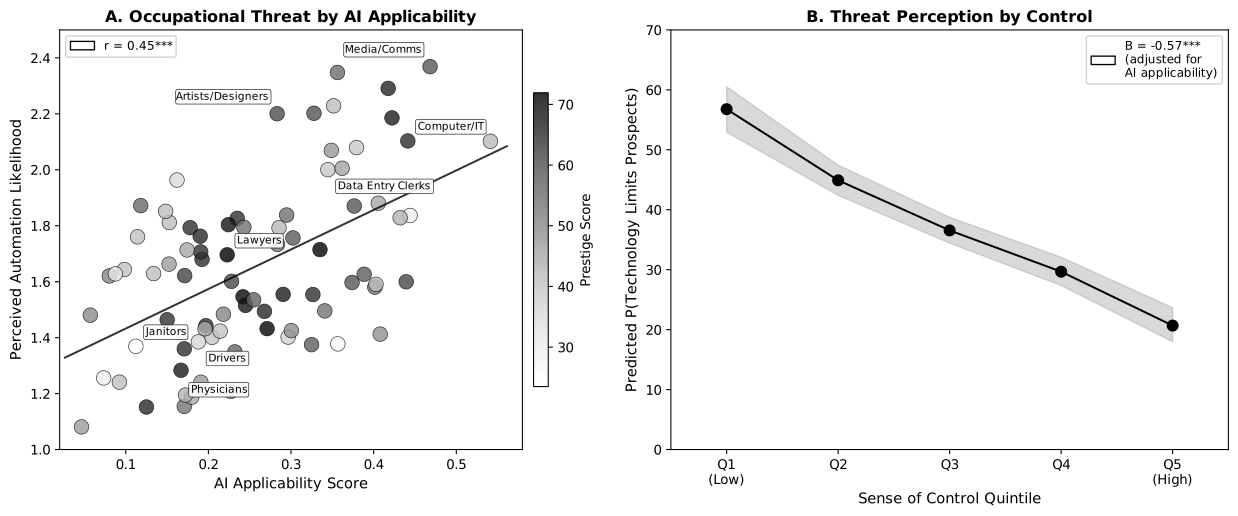
Drawing on cross-sectional and longitudinal surveys of Canadian workers before and after the release of ChatGPT, the analysis reveals that objective AI exposure predicts awareness but not perceived threat. Threat perception is instead structured by a worker's underlying sense of control. Workers across the occupational hierarchy invoke the very same symbolic deflections against AI, but only the secure find them effective.
The uncomfortable implication is that the workers most likely to be disrupted are also the least psychologically prepared for it. Those with enough workplace control to mount a convincing defense against automation threat are often the ones whose positions are most durable. Those without that control feel the threat acutely but lack the resources to deflect it.