The Status Stress Test
How Automation Threat Splits Status Horizons
What happens to your sense of occupational standing when the technologies you once felt secure against begin encroaching on your work? Not everyone responds the same way. For some, automation threat compresses the future, narrowing how far ahead they can project their status in the labor market. For others, the same threat barely registers.
This paper treats automation as a status stress test, a structural shock that separates workers who can narrate a plausible occupational future from those who cannot. Using three waves of panel data from the Canadian Quality of Work and Economic Life Survey (October 2023 to October 2025), I show that personal automation threat does not uniformly erode status expectations. Instead, it creates divergence.
Workers who perceive automation as likely but can construct a narrative of continuity maintain status horizons comparable to workers for whom automation is not salient at all. Those who believe they would simply be eliminated show dramatically compressed horizons. The difference is not between the threatened and the unthreatened but between those who can tell a story about what comes next and those who cannot.
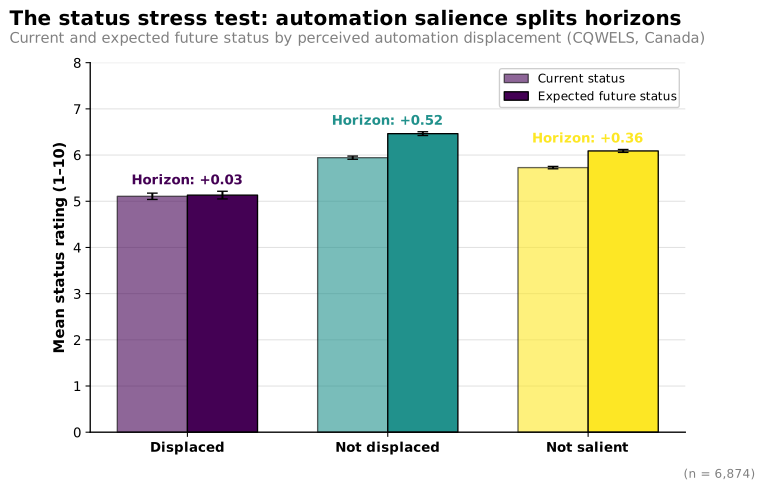
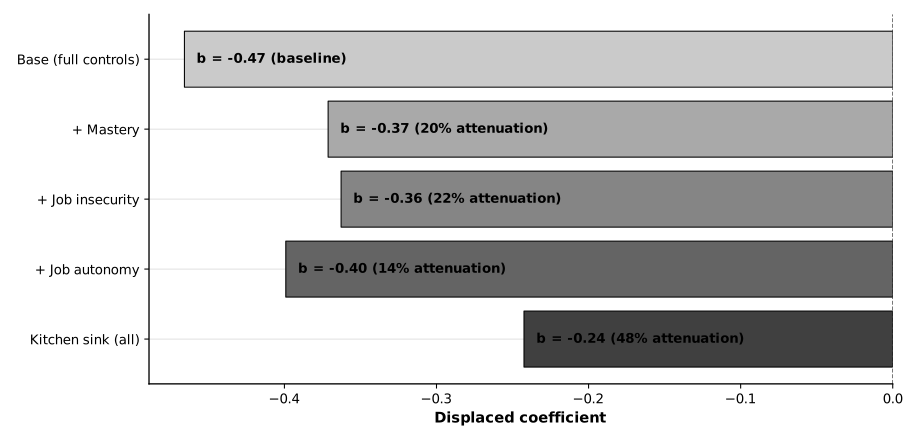
The mechanism is not generalized pessimism but the collapse of narrative continuity, the inability to construct a plausible occupational future. Mastery beliefs and job insecurity partially explain the penalty (about 36% attenuation), but the majority remains, suggesting a distinct temporal stressor that operates beyond control and anxiety.
Cross-national replication with U.S. data confirms the pattern holds across institutional contexts, though countries with stronger occupational licensing systems show weaker direct effects, pointing to institutional buffers that protect status projections from technological disruption.